
Introduction
In 2025, the Benton County Courthouse became the scene of a widely publicized incident involving Kerri Rollo and her sister Kaylee Rollo in what is now referred to as the Charlie Kirk memorial vandalism. The memorial had been established to honor a conservative activist and Turning Point USA founder who had passed away. Candles, signs, and other commemorative items were disturbed, and footage capturing the incident quickly went viral, leading to widespread public outrage. The incident triggered a national debate over protest versus vandalism, First Amendment rights, and the responsibilities of citizens in public spaces. While some viewed the sisters’ actions as a form of symbolic expression, others considered it an outright attack on a grieving community. Legal charges, bond requirements, social media backlash, and online fundraising campaigns followed, highlighting the consequences of viral events and the tension between free expression and public respect.
Quick Bio
| Attribute | Details |
|---|---|
| Full Name | Kerri Rollo |
| Nationality | American |
| Residence | Arkansas, USA |
| Known For | Involvement in Charlie Kirk memorial vandalism |
| Incident Location | Benton County Courthouse |
| Accompanied By | Sister Kaylee Rollo |
| Incident Description | Disturbed candles and signs at memorial, middle finger gestures, memorial stomped on |
| Charges Filed | Criminal mischief, obstruction of governmental operations, felony/misdemeanor depending on severity |
| Legal Status | Arrested and released on bond pending court proceedings |
| Viral Evidence | Memorial videos circulated online, footage went viral |
| Public Response | Widespread outrage, social media backlash, moral and political debate |
| Community Actions | Memorial restored by community, reflective gatherings held |
| Personal Fallout | Fired from job, ex-boyfriend relationship consequences, social ostracization |
| Support Campaign | GoFundMe campaign for legal defense; received mixed public response |
| Key Themes | Protest vs vandalism, First Amendment rights, ethical responsibility, civic accountability |
| Related Entities | Benton County Justice of the Peace, Turning Point USA founder, local law enforcement |
| Broader Implications | Legal and social consequences of viral public actions, public memorial respect, civic responsibility |
Who Is Kerri Rollo
Kerri Rollo, one of two Arkansas sisters involved in the incident, became a central figure in national headlines due to her role in the memorial desecration. Alongside Kaylee Rollo, she was captured on video stepping on candles and signs, while making gestures such as a middle finger salute toward the memorial. Critics claimed these actions were intended to provoke anger, while supporters argued that the sisters were exercising free speech rights in a highly charged environment. The viral memorial videos intensified scrutiny, affecting their professional and personal lives, including potential job loss and strained relationships. The incident highlighted the social and legal consequences of public actions, especially when amplified by viral media.
The Incident at Benton County Courthouse
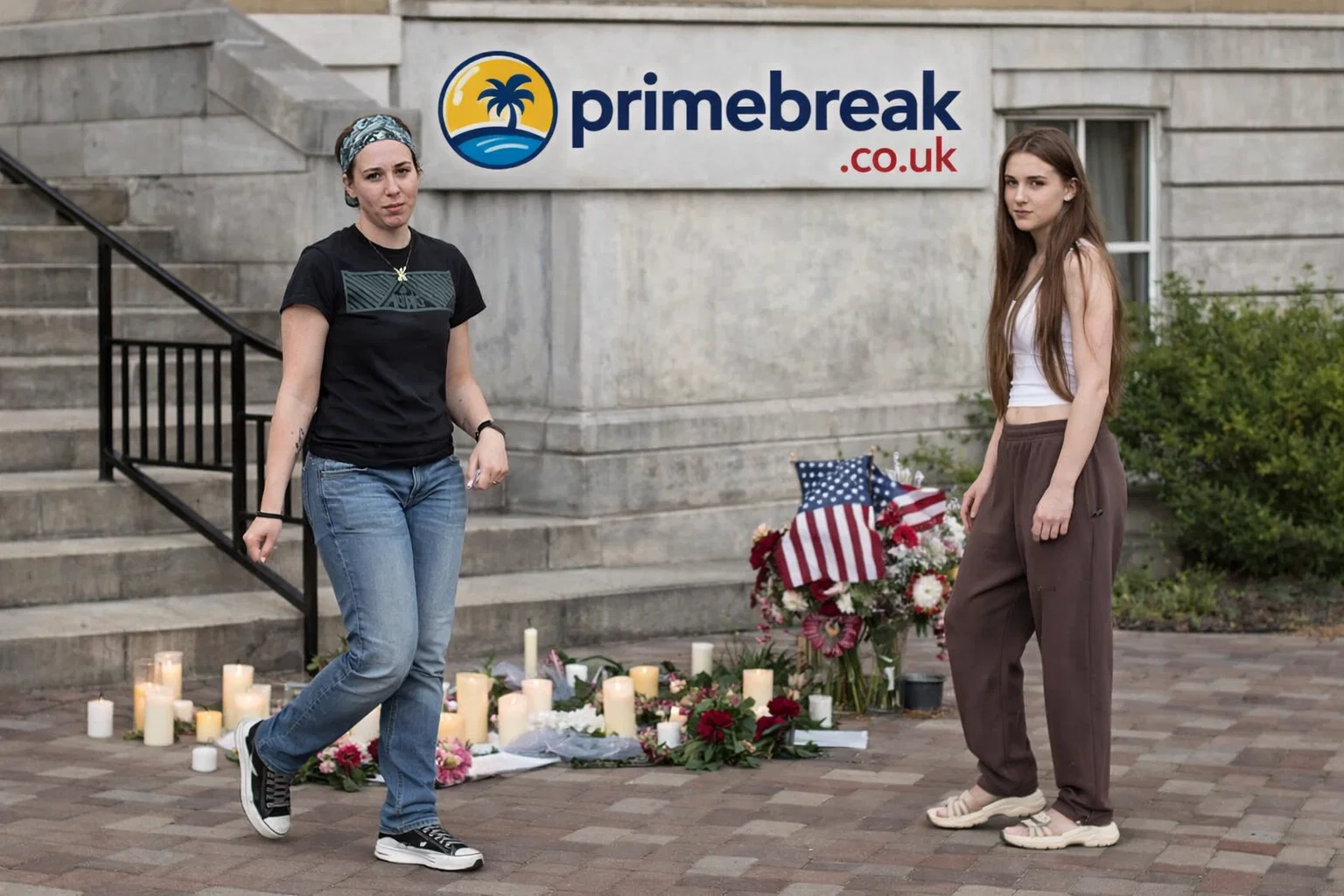
The memorial at Benton County Courthouse had been carefully arranged by community members to honor the activist’s contributions and legacy. Candles and signs were intended for reflection and mourning. The viral footage showed the sisters walking through the memorial, stepping on items and appearing dismissive of the display. Observers debated whether the behavior constituted a symbolic protest or an intentional act of vandalism. Local law enforcement described the conduct as crossing the line into criminal mischief and obstruction of governmental operations, as the incident disrupted courthouse activities. While supporters defended the sisters’ right to protest, the overwhelming public reaction condemned the desecration of a space intended for grief and remembrance.
Arrests and Charges
After the videos circulated widely, Kerri and Kaylee Rollo were arrested and charged with criminal mischief and obstruction of governmental operations. Depending on the severity of the disruption, the charges included both felony and misdemeanor classifications. Authorities cited the disturbance to public property and disruption of courthouse activities as grounds for legal action. Bond amounts were set, leading to their release on bond while awaiting trial. The case underscored the tension between viral public incidents and the legal system, as courts now had to weigh social outrage against constitutional protections.
Charges Filed Included
| Charge | Description |
|---|---|
| Criminal mischief charges | Accusation of intentionally damaging or defacing property |
| Obstruction of governmental operations | Interference with official court or public activities |
| Felony/misdemeanor | Depending on severity and damage assessment |
Community Response and Condemnation
The memorial desecration prompted swift reactions from local officials and residents. The Benton County Justice of the Peace and law enforcement publicly condemned the actions, emphasizing the importance of public memorial respect. Community members voiced outrage over the disruption of the grieving process and emphasized the ethical responsibility of respecting such spaces. Social media became a platform for debate, with some users defending the sisters as exercising free speech, while others criticized the actions as morally inappropriate. Local groups organized restoration efforts, replacing candles and signs and holding reflective gatherings to honor the activist’s memory. These actions reinforced the significance of civic responsibility and community solidarity even amid controversy.
Public Outrage and Social Media Reaction
The viral memorial videos ignited widespread public outrage, reaching national audiences through Twitter, Instagram, and other platforms. Discussions focused on the boundaries of First Amendment rights, claims of constitutional violations, and the ethical implications of disturbing public memorials. While some argued the sisters were engaging in a form of symbolic protest, others emphasized the moral and emotional impact on the grieving community. Social media exchanges escalated into doxxing and online harassment allegations, illustrating the intense scrutiny and consequences that viral footage can generate. The situation highlighted how a local event could transform into a national conversation about protest, vandalism, and public ethics.
The GoFundMe Campaign
Following the arrests, a GoFundMe campaign was launched to support the sisters’ legal defense. The fundraiser quickly became a point of public debate, with some emphasizing the importance of supporting legal costs and others criticizing the effort as inappropriate given the incident.
Campaign Details
- Purpose: Cover legal defense costs
- Amount raised vs goal: Varied, sparking public debate
- Public response: Mixture of sympathy and criticism
- Additional consequences: Increased online harassment and scrutiny
The campaign highlighted the intersection of online fundraising, viral media, and public opinion. It also emphasized the complexity of navigating moral judgment and legal responsibility in highly visible cases.
Fired from Job and Personal Fallout
Beyond legal repercussions, Kerri and Kaylee Rollo faced personal consequences. Reports indicated that both sisters lost employment due to public exposure, demonstrating how viral controversies can impact professional lives. Additional personal fallout included ex-boyfriend relationship consequences, eviction rumors, and social ostracization. The incident exemplifies how public actions captured online can trigger cascading effects across personal, professional, and social dimensions.
Protest vs Vandalism
A central debate in the aftermath revolved around whether the sisters’ actions constituted legitimate protest or criminal vandalism. Advocates cited First Amendment rights, while opponents emphasized the ethical and legal obligation to maintain public memorial respect. Key points included:
- Moral responsibility to honor grieving individuals
- Legal limits on actions disrupting public spaces or damaging property
- Social repercussions and community backlash
This debate highlighted the difficulty of balancing free expression with civic and moral responsibility, particularly when actions are amplified by viral media.
Political Tensions and Conflicting Narratives
The incident took place against a backdrop of national political tension. Some interpreted the sisters’ actions as politically motivated, while others viewed them purely as disrespectful behavior. Conflicting narratives emerged, influenced by gender and social identity context, political bias, and public interpretation of intent. These tensions illustrate the challenges of understanding symbolic acts in highly polarized environments, with national commentary often clashing with local perspectives.
Local Law Enforcement and Legal Proceedings
Throughout the case, local law enforcement provided updates and statements to clarify the legal perspective. They maintained that:
- The conduct exceeded peaceful protest boundaries
- Evidence from memorial videos established probable cause
- Charges were based on observable conduct rather than ideological motives
Court proceedings have involved complex debates over constitutional defenses and the extent of legal accountability. The case exemplifies how viral incidents intersect with traditional legal processes, requiring courts to balance public reaction, social norms, and constitutional protections.
Community Healing and Respect for Public Memorials
In the wake of public outrage and legal proceedings, community members organized efforts to restore the memorial’s dignity. These included replacing candles and signs, holding reflective gatherings, and emphasizing civic responsibility. The restoration efforts reinforced lessons about empathy, public decorum, and maintaining respect for community spaces, illustrating that collective civic action can help heal tensions even after highly divisive events.
Ethical Questions and Public Debate
The Rollo case raised important ethical and civic questions. Discussions focused on:
- Responsibilities toward grieving families and communities
- Boundaries of public expression in sensitive contexts
- Long-term consequences of moral or legal transgressions
The debates underscored the broader social implications of the incident and emphasized the need for ethical awareness, civic responsibility, and respect for community norms.
Lessons Learned and Broader Implications
Key takeaways from the incident include:
- Viral videos can elevate local events into national discourse
- Freedom of speech must be exercised responsibly
- Legal frameworks are essential for adjudicating public conduct disputes
- Online fundraising can influence public perception and intensify scrutiny
The case illustrates that symbolic acts captured online carry consequences far beyond the immediate location, influencing social, personal, and legal outcomes.
Conclusion Accountability Respect and Civic Responsibility
The story of Kerri Rollo and Kaylee Rollo demonstrates how individual actions intersect with community values, legal frameworks, and public perception. The Charlie Kirk memorial vandalism incident and its subsequent legal and social consequences highlight the importance of balancing free expression with respect for public memorials. Civic responsibility, ethical conduct, and legal awareness remain central to ensuring that public actions do not infringe upon the dignity or rights of others. Communities can learn from such incidents to strengthen civic engagement, promote empathy, and maintain public decorum.
Frequently Asked Questions
- What charges were filed against Kerri Rollo?
They faced criminal mischief charges and obstruction of governmental operations, including potential felony and misdemeanor classifications. - Was there a GoFundMe campaign for their legal fees?
Yes, a legal expense fundraiser was launched, generating both support and criticism. - Did viral videos lead to public outrage?
Yes, the memorial videos went viral, sparking social media reaction and community condemnation. - Were the sisters released on bond?
Yes, bond amounts were set, and they were released on bond pending court proceedings. - How did the community respond to the memorial destruction?
Community members restored the memorial, emphasizing public memorial respect and collective reflection.
