
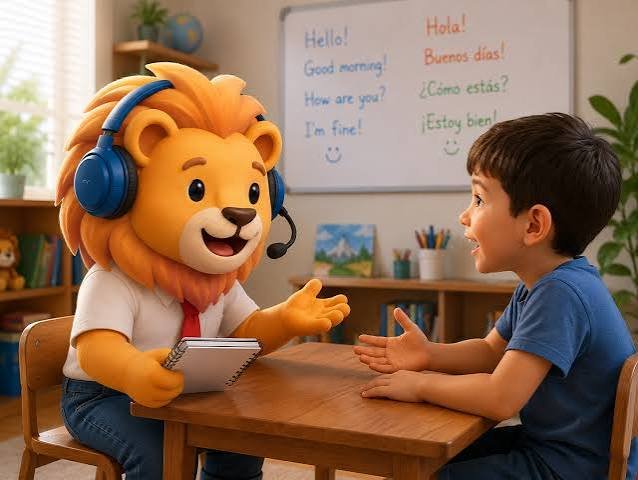
Early childhood represents a unique window of opportunity for acquiring speech and communication skills. Young children possess a high degree of brain plasticity, allowing them to absorb new sounds, sentence structures, and accents naturally. However, teaching a second language to young children requires methods tailored to their specific cognitive and emotional development stages. Understanding effective teaching strategies, as well as techniques that fail to produce long-term results, helps parents and educators make informed choices about early language acquisition.
What Works: Effective Early Learning Strategies
Preschoolers learn best when language acquisition occurs through organic, repetitive, and interactive experiences. At this stage, formal academic instruction is far less effective than immersive, play-based engagement.
Immersive and Contextual Exposure
Young children learn through context rather than explicit grammatical explanations. Placing children in environments where the target language is spoken consistently allows them to connect spoken words directly with objects, actions, and emotions. Daily routines like mealtime, outdoor play, and bedtime offer ideal context for introducing new vocabulary naturally.
Play-Based Learning and Music
Play is the primary work of early childhood. Interactive games, physical movement, and music engage multiple areas of the brain, making linguistic retention much stronger. Songs, rhymes, and rhythmic phrases help children memorize speech patterns and pronunciation without feeling pressured or bored.
Social Interaction with Native Speakers
Human connection remains the most critical factor in the development of early communication. Interacting with native-speaking teachers, family members, or peers encourages active communication. Children naturally want to connect with others, and social play provides a compelling incentive to practice speaking. Enrolling a child in a specialized environment, such as a Spanish immersion school in San Antonio, provides consistent daily exposure to native speakers within a structured, community-oriented setting.
What Doesn’t Work: Methods to Avoid
While enthusiasm for early education is high, certain traditional and modern teaching methods yield poor results when applied to young learners.
Rote Memorization and Flashcards
Forcing preschoolers to memorize isolated vocabulary lists or drill flashcards contradicts how young brains process information. While a child might temporarily memorize a word to please an adult, this approach does not build functional communication skills or deep comprehension. Isolated words lack the context necessary for real-world application.
Passive Screen Time and Educational Apps
Relying on digital devices, videos, or passive software applications rarely builds genuine language capacity in early childhood. Studies show that toddlers and preschoolers learn speech significantly better through live human interaction than from video screens. Passive consumption lacks the social feedback loop essential for true linguistic development.
Over-Correcting Mistakes
Constantly interrupting a young child to fix grammar errors or pronunciation can undermine confidence and induce anxiety. Preschoolers are still mastering their primary language, and errors are a natural part of the learning journey. Frequent corrections may cause children to shut down and avoid speaking the new language entirely.
Creating a Balanced Approach at Home
Parents do not need to be fluent in a target language to foster a supportive learning environment at home. Consistency, positive reinforcement, and realistic expectations yield the best long-term outcomes.
Integrating Short, Daily Sessions
Consistency matters far more than duration. Exposing a child to a new language for fifteen to twenty minutes daily creates steady momentum without causing mental fatigue. Simple activities like reading bilingual picture books, listening to music, or playing basic games build a sustainable habit over time.
Focusing on Comprehension Before Production
Children often develop listening comprehension long before they feel comfortable speaking a new language. This receptive period is completely normal. Adults should continue providing rich auditory input without forcing the child to respond in the target language before they are ready.
Final Thoughts
Language learning in early childhood should feel like a natural exploration rather than an academic chore. By prioritizing play, real-world context, and meaningful social interaction while avoiding passive screens and rigid drills, parents can nurture a lifelong foundation for communication and cultural appreciation.
