
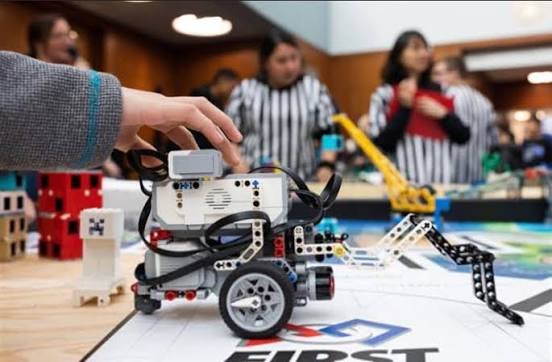
Building a functional robot is one of the most demanding interdisciplinary challenges in modern engineering. A successful robot must seamlessly combine mechanical hardware, custom electronics, embedded control software, and real-time sensory feedback—all while operating in unpredictable real-world environments.
Whether designing autonomous mobile robots (AMRs) for industrial warehouses, precision robotic arms for medical manufacturing, or high-stakes competition machines, engineering teams routinely run into physical and logical bottlenecks.
Overcoming these design hurdles requires a mix of strategic material selection, rigorous math, and clever system architecture. Here are the five most critical design challenges robotics teams face and how expert engineers solve them.
What Are the Main Design Challenges Robotics Teams Face?
The main design challenges robotics teams face include managing tight power budgets, achieving millimeter-level motion control, balancing structural strength against strict weight limits, filtering electrical noise from sensor signals, and designing hardware for easy field repair.
By adopting modular mechanical designs, utilizing precision position sensors, and implementing robust closed-loop control algorithms, robotics teams turn complex hardware constraints into reliable mechanical performance.
1. Balancing Power Budget and Weight Constraints
Every gram added to a robot’s frame requires more torque to move, which increases motor current draw and drains battery capacity faster. Conversely, shrinking the battery to save weight reduces runtime and limits motor power output.
To solve this dilemma, engineering teams rely on strict power budget management in robotics:
- Materials Optimization: Swapping heavy steel plates for aircraft-grade aluminum, carbon fiber, or high-strength 3D-printed composites preserves structural integrity while shedding crucial pounds.
- Gear Ratio Tuning: Selecting the ideal gear reduction allows smaller, lighter motors to lift heavier payloads without pulling excessive stall current.
- Regenerative Systems & Sleep States: Designing power electronics to shut down inactive subsystems during low-duty cycles optimizes overall battery longevity.
2. Achieving High-Precision Motion Control and Sensing
A robot is only as capable as its sensory feedback. If an autonomous arm moves a fraction of a millimeter off target, it can drop sensitive components, fail an alignment check, or damage surrounding machinery.
Open-loop systems that rely purely on motor rotations often accumulate positioning errors due to mechanical backlash, gear slippage, or physical deflection. To maintain pinpoint accuracy, engineers implement closed-loop feedback control systems.
Relaying continuous, accurate telemetry back to the main processor requires high-grade hardware. For instance, when monitoring stroke distance on linear actuators, robotic grippers, or suspension mechanisms, integrating a durable linear position sensor allows control systems to track absolute displacement in real time. This precise spatial feedback ensures the robot adjusts its movement dynamically, compensating for mechanical flex or external resistance instantly.
3. Managing Structural Rigidity vs. Mechanical Flexibility
A robot frame that bends under load causes physical misalignment, which destabilizes drivetrain kinematics and throw off internal sensors. However, making a chassis completely rigid can cause components to fracture when exposed to sudden impacts or rough terrain.
Robotics teams resolve this by engineering intentional flex into specific structural points:
- Compliant Mechanisms: Using flexible joints or spring-loaded suspension elements absorbs kinetic shock from unexpected collisions without damaging sensitive gearboxes.
- Finite Element Analysis (FEA): Before cutting metal, teams run digital stress simulations to identify high-stress focal points, adding reinforcement only where necessary while leaving non-critical zones hollow or skeletonized.
4. Mitigating Electrical Noise and Signal Interference
Robots are dense environments packed with high-power brushless motors, switching power regulators, radio transmitters, and delicate microcontrollers. The electromagnetic interference (EMI) generated by heavy motor currents can corrupt low-voltage sensor signals, causing errant motor twitches or sensor blackouts.
To maintain clean signal integrity, robotics teams utilize proven electrical isolation strategies:
- Differential Signal Lines: Utilizing twisted-pair wiring and shielded CAN bus communication networks reduces external noise pickup.
- Optocouplers and Ground Isolation: Physically separating motor power planes from logic power planes prevents voltage spikes from resetting primary control boards.
- Digital Filtering: Implementing Software Kalman filters or low-pass digital filters smooths out jittery sensor telemetry before processing motion commands.
5. Designing for Maintainability, Modularity, and Real-World Wear
High-performance robots operate under harsh physical stress. Gears wear down, drive belts stretch, and structural fasteners loosen over time. A common rookie mistake is building a hyper-compact robot that requires dismantling half the machine just to replace a worn motor or blown fuse.
Experienced teams prioritize serviceability early in their CAD modeling process by focusing on smart robotic actuator selection and modular assembly:
- Quick-Swap Modules: Designing gearboxes, wheel pods, and end-effectors as self-contained sub-assemblies attached with quick-release hardware allows rapid repairs during field operations.
- Standardized Hardware: Using a single hex-head bolt size across the entire chassis minimizes the tools required for routine maintenance.
- Diagnostic Telemetry: Embedding voltage, temperature, and current sensors directly onto custom PCBs lets teams monitor component wear and schedule preventive maintenance before catastrophic failure occurs.
Robotics Design Pitfalls vs. Pro Strategies
| Design Area | Common Rookie Mistake | Expert Engineering Strategy |
| Sensing | Relying solely on wheel encoders prone to slippage | Combining absolute position sensors with IMU sensor fusion |
| Wiring | Loose, unshielded “spaghetti” wiring across frames | Shielded, custom-loomed cable tracks with strain relief |
| Structure | Over-engineering thick metal plates “just in case” | FEA-guided pocketing and composite material usage |
| Power | Selecting battery capacity without calculating duty cycles | Modeling full electrical draw profiles under peak mechanical loads |
Frequently Asked Questions
Why is closed-loop sensing better than open-loop control in robotics?
Open-loop control assumes the robot executed a command precisely as instructed. Closed-loop control continuously measures actual physical movement using sensors, allowing the system to detect and correct positioning errors caused by friction, slip, or external obstacles.
How do robotics teams decide between carbon fiber and aluminum?
Aluminum is cost-effective, easy to machine, and handles impact forces well without catastrophic snapping. Carbon fiber offers an exceptional strength-to-weight ratio for rigid structural tubing, but it is harder to machine and can crack under sharp point impacts.
Conclusion
Building a high-performing robot requires overcoming interconnected trade-offs. Weight affects power draw, mechanical flex distorts sensor accuracy, and high motor currents threaten delicate signal lines. By approaching robot design holistically—balancing structural efficiency, shielding electrical pathways, and incorporating robust position sensors—engineering teams transform complex physical challenges into reliable, automated machines capable of excelling in demanding real-world environments.
