
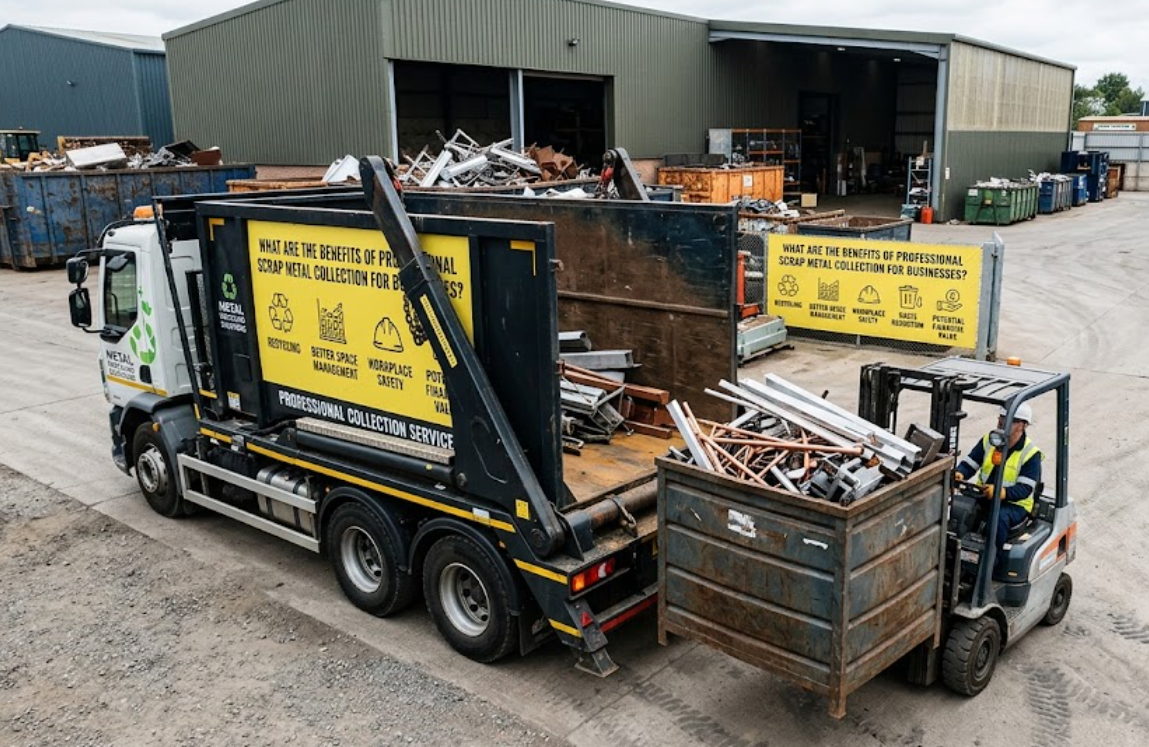
If your business produces scrap metal as part of its day-to-day operations, managing this waste effectively can be an important part of running your premises. Whether you work in construction, manufacturing, engineering, retail or another industry, unwanted metal can quickly take up valuable space. Professional scrap metal collection can provide a practical way to manage this material. But what are the benefits of professional scrap metal collection for businesses? And what can you expect?
What Is A Professional Scrap Metal Collection?
Professional scrap metal collection involves a specialist waste service collecting unwanted or surplus metal from your business premises.
Depending on your requirements, this may include materials such as steel, aluminium, copper, brass and other types of metal.
The collection process can be arranged around the volume and type of scrap your business produces, helping you manage metal waste without having to deal with its removal yourself.
For businesses that regularly produce significant quantities of scrap metal, having a consistent collection service can make waste management easier to manage.
Keeping Your Business Premises Organised
One of the simplest benefits of professional scrap metal collection is that it can help you keep your premises more organised.
Scrap metal can take up considerable space, particularly if it is allowed to accumulate over time. Piles of unwanted material can also make working areas more difficult to navigate.
Regular collections can help prevent scrap from building up and allow you to maintain a clearer working environment.
This can be particularly useful for businesses with limited storage or working space.
Making Better Use of Available Space
Commercial premises can be expensive to operate, so making good use of the space available to you is important.
If areas of your premises are being used to store unwanted metal, you may be able to make better use of that space by arranging regular collections.
Clearing scrap can create additional room for stock, equipment, vehicles or other business activities.
For businesses that generate metal waste regularly, a planned collection schedule can help prevent useful space from gradually becoming occupied by unwanted materials.
Supporting Workplace Safety
Accumulated scrap metal can create potential hazards in a busy working environment.
Sharp edges, protruding pieces and unstable piles of metal can increase the risk of trips, cuts or other accidents, particularly if materials are not stored correctly.
Removing unwanted scrap regularly can help you maintain a more orderly workplace.
However, proper storage and handling remain important even when you have a professional collection service. Employees should be given appropriate procedures for handling and storing scrap before it is collected.
Supporting Recycling and Resource Recovery
Metal is a valuable material because many types can be recycled and reused.
Professional scrap metal collection can help ensure that suitable materials are directed towards recycling and recovery processes rather than being treated simply as general waste.
Recycling metal can reduce the need to extract and process new raw materials, helping to conserve natural resources and reduce some of the environmental impacts associated with metal production.
For businesses looking to improve their waste management practices, recycling scrap metal can therefore form part of a wider approach to using resources more responsibly.
Different Types of Scrap Metal Can Be Managed
Businesses can produce several different types of scrap metal depending on their industry and operations.
For example, construction companies may produce steel offcuts and old metal fixtures, while engineering and manufacturing businesses may generate aluminium, copper or other metal remnants.
Separating different materials where possible can make recycling and recovery more straightforward.
A professional scrap metal collection service can help you understand what types of material they accept and how you should prepare your scrap for collection.
Reducing the Amount of Waste Going to Landfill
Recycling suitable metal can help reduce the amount of waste your business sends to landfill.
Metal is generally well suited to recovery because it can often be processed and used again without losing its fundamental properties.
By separating scrap metal from general waste, you can potentially divert a useful material away from disposal routes and towards recycling.
This can be a relatively straightforward step for businesses looking to improve their overall waste management.
Potential Financial Benefits
Depending on the type and quantity of metal you produce, scrap metal may have a financial value.
Some metals, such as copper and aluminium, can be particularly valuable as recyclable materials. The value of your scrap will depend on factors including the type, quantity and current market conditions.
Professional collection can therefore provide an opportunity to recover value from material that your business no longer needs.
However, scrap metal prices can change, so it is important not to assume that the same financial return will always be available.
Choosing the Right Collection Service
If you decide to use professional scrap metal collection, it is important to choose a service that suits your business requirements.
Consider the types and quantities of metal you produce, how frequently you need collections and whether the service can accommodate your premises.
You should also make sure you understand what materials are accepted and how the collection process works.
A reliable service should provide clear information about collection arrangements and any requirements you need to meet before the material is collected.
